• Français
Hypoxia risk awareness

Hypoxia risk awareness

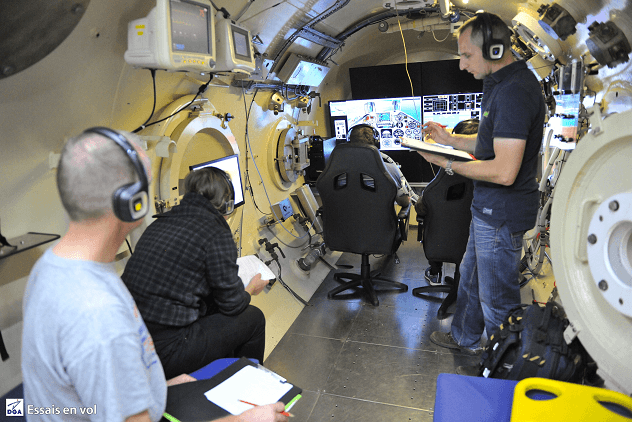
The Comex Hypobaric Test Center is pleased to regularly receive a delegation of students and instructors of EPNER (School of flight test and reception staff) for an hypoxia risk awareness session in altitude chamber hypoxia training.

©EPNER

EPNER

Formerly flight test center / CEV created in 1946, now part of DGA Flight Test Dpt, EPNER trains crews involved in test flights ; theoretical courses come along practical hands-on exercises that allow in-flight tests of the aircraft characteristics, carried out under the optimum safety conditions. Trainees are : test pilots, engineers, mechanical and test engineers as well as air traffic controllers for specific test flights.

Located in Istres (60 km from Marseilles) since 1962, EPNER carries out its activities within the DGA (General Delegation for Weapons, a branch of French MOD). This gives the school a unique position between the Armed forces and the Industry on one hand, and between military and civilian testing sectors on the other hand. EPNER has been training crews in these different areas for more than 70 years.

The high quality of this training, based on teamwork between pilots, engineers and air traffic controllers, is recognized at the highest levels of the international aviation community.

 Comex Altitude Simulator for human subject test aeronautical oxygen equipment 

 In order to carry out hypobaric tests in the field of aeronautics and space, Comex Test Center of has been equipped since 2017 with an hypoxic chamber, also called hypobaric chamber oraltitude simulator.

The possibility of reproducing in this 20m2 hypoxic room flight conditions up to 40 000 meters of altitude (131 000 feet), allows our partners, the main european and worldwide international organizations and industries in the aeronautics and aerospace sectors, to perform, with the help of our dedicated staff, tests on human behaviour, as in this case a simulation of hypoxia – and also qualification tests for equipment and materials.

Total control of extreme conditions of pressure and temperature allows our company to be involved in a very wide range of projects.

Hypoxia situation in COMEX altitude chamber

 With the unit set up in the flight simulator mode, this test was designed to allow EPNER trainees to face hypoxia situations in the most realistic possible conditions.

This allowed the crew to be exposed to hypoxia in an attempt for each trainee to identify possible precursory physiological signs.

It further allowed detection of equipment failures (O2 breathing masks) or structural damage on the aircraft (due to sudden pressure loss etc.).
It also emphasized the dangers of flying at high altitude.

Under these various situations, trainees had to apply recently learned techniques to bring the crew safely back to the ground or to a possible ejection zone.

 Medical supervision

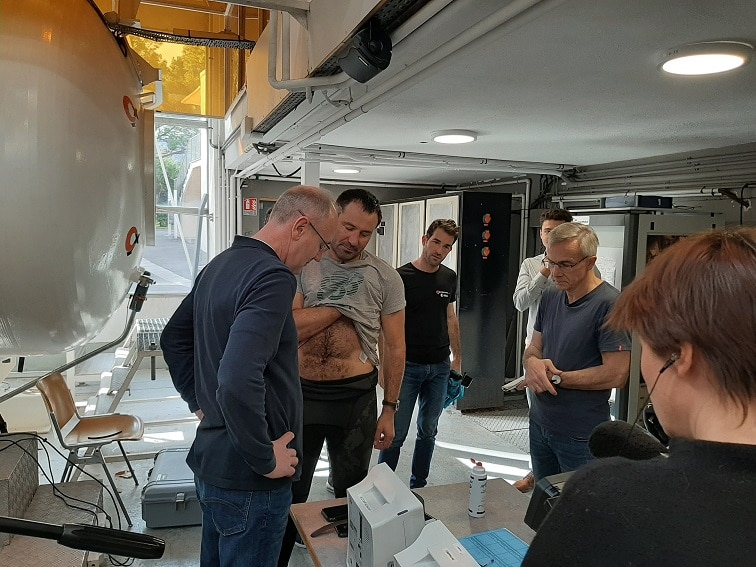
Medical assistance was provided all through the test sessions by the Institute of Physiology and Medicine in the Maritime Environment and Extreme Environment “PHYMAREX” which brings together a group of doctors and nurses mainly from the Public Assistance of Marseille Hospitals (APHM) and more precisely the Hyperbaric Center of Sainte Marguerite University Hospital. Operational members are trained in hyperbaric medicine and / or emergency medicine and / or aeronautical and aerospace medicine.

Under the supervision of Dr. Mathieu COULANGE, emergency physician specializing in hyperbaric medicine, maritime medicine and aeronautical medicine. Head of the hyperbaric, underwater and maritime medicine department of Sainte Marguerite University Hospital.

Hypoxic chamber : Preliminary steps to an actual man dive at the altitude of 6400m above sea level

Hypoxic chamber : Preliminary steps to an actual man dive at the altitude of 6400m above sea level

Frédéric Swierczynski, diver of the extreme, came to prepare for
a high altitude dive in the lakes of the world’s highest active volcano, el Nevado Ojos del Salado in the Andes. This preparation took place in an altitude simulator, the hypoxic chamber at Comex trial and test Centre in Marseille, France.

Extreme altitude diving at 6,400m

Accompanied by Sébastien Devrient, a mountain guide and Film director, Frédéric Swierczynski prepared for this expedition to the Andes at the border between Argentina and Chile. Their final goal is to carry out a manned dive into the waters of the highest lake in the world at 6,390 m on the mountain side of the volcano Nevado Ojos del Salado.

The adventure started last year when Frédéric performed a first dive in a lake at 5,870 m on the same volcano side. However, early comers snow and ice made it impossible to carry out the dive at 6,390 m.
They return this year in order to fully achieve their goal.

These two expeditions will be the subject of a film «a drop of water on a volcano» scheduled to be released in Switzerland in 2020.

The story of this feature documentary, directed by Sébastien Devrient for Vertiges prod, will not only focus on a sporting feat but, above all, it will emphasize the human adventure. It will also propose a reflection on man’s ability to adapt to his dreams and
ambitions as well as addressing the problem of acclimatizing the human body confronted to a wild and unpredictable nature. 

Preparation in hypoxic chamber

It is at Comex altitude simulator, an hypobaric chamber complex, that Frédéric Swierczynski and Sébastien Devrient came to prepare their expedition, joining equipment tests, physical training and dive procedure rehearsal. The first step was to simulate an altitude of 6,400 m and then a 20-minute immersion in chilled water at 2°C. At this altitude, one has to face the cold temperature conditions and the lack of oxygen, less than twice as rare as at sea level due to the ambient low atmospheric pressure.

They have thus been able to reproduce the different conditions they will face during this adventure, supervised by our technical teams and under the medical supervision of the PHYMAREX Institute.


Medical supervision

Throughout the experiment, a medical team from the PHYMAREX Institute, Doctor Mathieu Coulange (MD) and Doctor Jean-Charles Reynier (MD), continuously monitored Frédéric’s vital parameters – body temperature, heart rate, respiratory rate, carbon dioxyde and oxygen saturation…

Because of its immersion at an altitude of 6,400 m, this represents a huge difference in atmospheric pressure compared to a normal dive performed at sea level (1010mb compared to 440mb approx.).


This is a very uncommon and exceptional mission, we are taking advantage of this experience to collect as much data as possible. They will be used in publications for the scientific community,’ explains hyperbaric physician Jean-Charles Reynier

Doctor Jean-Charles Reynier (MD)

Hyperbaric Medical Doctor, Phymarex


Altitude simulator

The ability to reproduce altitudes up to 40,000 m (131,000 feet) in this 20m² hypoxic chamber complex meets the needs of major european and global manufacturers and service companies in the aeronautics and aerospace sector, such as the validation and certification of equipment, masks, suits, helmets, communications, etc.

as well as manned tests in order to prepare and make fully aware pilots and aircrew to hypoxic risks they may have to face during an actual flight.

The close control and monitoring of extreme pressure and temperature conditions allows our company to be involved in a very wide range of projects.

EUROPEAN SPACE AGENCY ASSIGNS COMEX TO SUPPORT THE UNDERWATER TRAINING OF ASTRONAUTS IN COLOGNE

EUROPEAN SPACE AGENCY ASSIGNS COMEX TO SUPPORT THE UNDERWATER TRAINING OF ASTRONAUTS IN COLOGNE

PRESS RELEASE

COMEX and the European Space Agency (ESA) have signed a contract on astronaut underwater training at the European Astronaut Centre (EAC) in Cologne.

On May 18th, 2019, the Marseille-based enterprise COMEX (Compagnie Maritime d’Expertises) and the European Space Agency (ESA) have signed a contract on supporting the underwater training of astronauts and operations of ESA’s Neutral Buoyancy Facility (NBF) at the European Astronaut Centre in Cologne. The NBF is a unique training and testing facility housing a 10 m deep water tank, in which full scale mock-ups of International Space Station (ISS) modules are immerged. This is the only place in Europe, where astronauts receive training for Extra-Vehicular Activities (EVA) also known as spacewalks. ESA has developed and implemented in the NBF a world-wide unique EVA Prefamiliarisation Training Programme to train the European astronauts on the rules of engagement for spacewalks on the International Space Station (ISS). This programme has proven its efficiency with the multiple spacewalk assignments of ESA astronauts in the past 10 years and is also used as EVA proficiency training in Europe. “This innovative ESA training has been in place for already 15 years and is regularly enhanced through a very fruitful cooperation with NASA. Its objective is to boost ESA astronaut initial EVA capabilities in safely and efficiently performing EVA tasks, before they get exposed to the spacesuit constraints through their further EVA skill training by NASA in Houston. Having now COMEX on board is an additional and appreciated asset for the diving activities in the NBF” says Hervé Stevenin, ESA Head of the EVA training at EAC.

The NBF also offers the capability to simulate the Moon gravity through immersions in slightly negative buoyancy. ESA has already prototyped Lunar EVA equipment & tools, which have been tested in simulated lunar gravity inside the NBF tank for the preparation of the ESA upcoming contribution to the return of humans to the Moon surface.

The present contract also includes the continuation of these activities to test European lunar surface operations and hardware to prepare the return of astronauts on the Moon. “Within this contract we will provide ESA with a team of divers to support the training of astronauts underwater for missions to the International Space Station (ISS). But the project goes beyond ISS and will also serve to support ESA contribution to future human lunar exploration missions” says Alexandre Oskian, Director at COMEX. The company is working for ESA on several projects related to the future Moon exploration and is actively investigating spin-off technologies and synergies between the maritime and space sectors.

Kathrin Nowak, NBF Diver and COMEX Team Lead at the European Astronaut Centre says: “Most of the divers working for COMEX in Cologne have a long experience of supporting astronaut training and tests at the Neutral Buoyancy Facility. We are happy that we can combine the expertise of COMEX and the proficiency of the diving team to support ESA in NBF activities”.

About COMEX
The Compagnie Maritime d’Expertises (COMEX) was founded in 1961 by Henri Germain Delauze (1929-2012). It is a worldwide pioneer in offshore diving and technologies for human interventions in extreme environments. The Compagnie is involved in several projects for the European Space Agency on the development of technologies to return humans to the Moon such as the development of materials of future space suits (Project PEXTEX) or the design of the Science Airlock for the future space station GATEWAY (Project ESPRIT under a contract with AIRBUS).

Comex maritime expertise for neutrino research

Comex maritime expertise for neutrino research

What is a neutrino ?


Neutrinos are neutral elementary particles of virtually zero mass. They are produced during nuclear reactions generated by extremely violent cosmic cataclysms such as black holes, supernovae and the Big Bang.

Once produced, they move at a speed close to light speed. Because of their zero electric charge they move in a straight line without stopping, crossing the stars and planets as if they did not exist, all the way out to the borders of the Universe. The earth is crossed by trillions of neutrinos every nanosecond.

By their nature neutrinos are therefore extremely difficult to detect. Fortunately, on rare occasions, a high-energy neutrino collides with an atom. The collision disintegrates the atom nucleus and the neutrino transforms into another particle called muon.

The created muon continues its movement on a trajectory almost identical to that of the neutrino and can be identified thanks to the cone of blue light it generates, known as the Cerenkov radiation. In order to detect this tiny bit of light, it is necessary to use extremely sensitive detectors while operating under total darkness conditions.

Crédit photo : KM3NeT

Why and how to monitor neutrinos ?


Neutrinos contain information about the cataclysmic events that produced them. Scientists consider them as messengers.

The observation of high-energy neutrinos offers a new angle to look at the Universe.

A special kind of telescopes is used to detect and observe neutrinos. Since neutrinos almost hardly interact with matter and in order to be protected from cosmic radiation, such telescopes are usually buried underground in large liquid-filled caves.

ANTARES and KM3NeT


ANTARES (Astronomy with a Neutrino Telescope and Abyss Environmental Research) : At the time of its design and erection, was the largest neutrino telescope in the northern hemisphere and the first built in a marine environment. In operation since 2006, it is installed deep down 2500 msw in the Mediterranean Sea, 40 kilometers offshore Toulon (France).

The main purpose of ANTARES is the search for cosmic neutrinos generated by violent phenomena of the Universe. It consists of 900 photomultipliers spread over 12 450 meter high lines, covering a surface of 0.1 km2.

The detected neutrinos are actually the few particles that collide with the matter in the vicinity of the detector, generating a muon that is detected by Cerenkov effect (blue light radiation). Unlike

optical telescopes, ANTARES looks downwards, across the Earth. The flow of particles crosses the Earth through the southern hemisphere and rises from the ocean floor up to the surface in the northern hemisphere.

KM3NeT (cubic Kilometer Neutrino Telescope) : Designed thanks to the feedback of the ANTARES detector, this second-generation telescope is being installed in the abyss of the Mediterranean sea.

A first detector, called ARCA (Astroparticle Research with Cosmics in the Abyss), installed offshore Sicily, is dedicated to the search for high-energy neutrinos coming from cataclysms in the Universe such as supernovae or the formation and evolution of black holes. A second detector, called ORCA (Oscillation Research with Cosmics in the Abyss), is under construction offshore Toulon. It will allow a determination of the mass hierarchy of neutrinos, precisely studying the flow of atmospheric neutrinos crossing the Earth.

These underwater infrastructures are also a subsea platform for multidisciplinary experimentation, hosting numerous studies in the fields of marine, terrestrial and environmental sciences as part of the EMSO seabed observatories..

This project is financed with the assistance of the PACA Region (Contract Plan State-Region), the French State (Regional Delegation to Research and Technology) and the European Union (European Regional Development Fund).

Comex maritime expertise for research


JANUS 2 surface support


General presentation

JANUS 2 is a 30-meter catamaran with dynamic positioning allowing our multidisciplinary team to use a large number of oceanographic and hydrographic equipment.

Mixed campaigns may be carried out, such as : 

  • Comprehensive geophysical measurements and data gathering : Side scan Sonar, magnetometer, multibeam sonar, sediment echosounder.
  • Geotechnical measures : CPT.
  • Environmental Studies : Biology, Sediments.
  • ROV Inspections: Visual GVI/CVI, debris survey, ORUS 3D metrology, 3D submillimetre modelling.
  • Underwater work Support down to 2500 msw.
  • Shallow manned diving support vessel

The ROVs, which are constantly mobilized onboard the vessel, allow a very good combined operation of measurement tools at all times. This facilitates underwater inspection campaigns, without involving third parties and avoiding potential additional intermediate mobilizations.
JANUS 2 can operate two ROVs simultaneously, namely the 1000 msw SUPER ACHILLE ROV and the 2500 msw APACHE ROV.
Using two azimutal thrusters and two bow thrusters, JANUS 2 Dynamic Positioning system (DP) allows to carry out two different types of operations.

 MOBILE VESSEL

JANUS 2 can track one or several mobile devices equipped with transponders : Manned submarine, ROVs, AUVs etc. either in constant heading or in automatic alignment of the vessel with the target.
sur la cible.

 FIXED VESSEL

The DP system maintains the vessel in a fixed position relative to the bottom using either the DGPS system or an acoustic beacon positioned at a fixed location on the sea bottom (transponder).

APACHE ROV main features

JANUS 2 is equipped with an APACHE Subatlantic hardwired underwater observation and light work vehicle remotely operated from the surface down to 2500msw deep. The APACHE is connected to its garage called “TMS” (Tether Management System) by a 120m+ umbilical lead.

The TMS also plays the role of relay and distribution : it carries the necessary power conversion system and data multiplexing unit between the robot and the surface.The TMS is mechanically attached to a 3000m power and optical fibre cable operated by means of a dedicated drum with multicore slipring at surface level.

The APACHE/TMS pair offers a robust and safe inspection solution throughout the water column, operated either in close vicinity of complex structures as well as in continuous systematic survey inspection up to 0.8 kts navigation speed, using the DP Navigation autofollow link.

Our APACHE ROV is compact, lightweight and very agile in manoeuvring. Specific equipment and tools can be installed on request (extra electrical and hydraulic power supply available.) he APACHE can be considered as a multi-instrumented platform able to meet the specific needs of missions such as: Underwater works assistance and support, photogrammetry/submillimetre 3D metrology, debris survey, CVI/GVI, TSS, SSS/SBP etc.

Main Features :

Dimensions H x W x W (mm): 820 x 900 x 700
Weight in Air/ Water (kg): 140/ Neutral
Power (kVA): 7.6 kVA/ 440 VAC, 50/60 Hz, 3 phases + neutral
Maximum operating depth (msw): 2800
Length of electric cable (msw): 2700

Propulsion :

4 thrusters
Longitudinal thrusters FW (kg): 50 / RV (kg): 40
1 Lateral thruster (kg): 30
1 vertical thruster (kg): 30

Payload (kg) : 30

Communication : FO single mode

Sensors and accessories :

1 KONGSBERG colour camera with tilting support
1 BOWTECH wide angle camera
1 BOWTECH mini camera
1 HD Camera
4 DEEPSEA POWER&LIGHT 250 W projectors
1 TRITECH Panoramic Seaprince 675 kHz sonar
1 PA500 altimeter
1 pressure sensor
1 Hydraulic Skid with 2 HYDROLEK 5-axis manipulators.
1 jetting pump
1 fluxgate gyroscope
1 ISA 500 Inertial Movement Unit MRU+altimeter (optional)(optionnel)

Automatic modes :

• Auto Heading
• Auto Altitude

At the ANTARES site

In 2012, Comex Marine Department joined the project and carried out the connection of a line of photosensitive sensors using the ROV APACHE at -2500 msw depth.

This was the first connection operation at -2500 msw carried out by means of an observation class ROV.
To meet the ANTARES work specifications, modifications had to be made to the ROV (addition of two hydraulic arms, three video channels, one optical connector cleaning system).

COMEX and the CNRS – CPPM have worked together to produce an adapted tool which was developed at the CPPM as part of the MEUST NUMerEnv KM3NeT project. 

MEUST NUMerEnv Line base Design – 2500 m


Following the ANTARES programme, the Centre de Physique des Particules de Marseille (CPPM, AMU-CNRS/IN2P3) launched the MEUST NUMerEnv/ KM3NeT programme.

In 2014, as part of this project, COMEX was commissioned to design the supporting platform for the photomultiplier line. This bracket was deployed at a depth of -2500 msw in order to keep the line in position, ensure its stability and allow the underwater connection through a connecting cable to the junction box.
This platform supports the “Wet matable” connection system developed at the CPPM

In collaboration with the Foselev Marine CASTOR 2 support vessel, COMEX participated in the deployment and connection of the first KM3NeT/ORCA line as well as in the implementation of an instrumented module for environmental purposes.

The conditioned line was lowered from CASTOR 2 over a 2500 msw deep seabed. Operated from JANUS 2, the COMEX APACHE ROV witnessed the positioning of the line at 25 meter distance of the Node at the depth of 2500 msw. It then unrolled the connecting cable and connected the ODI electro-optical connectors to the main onshore-connected node. The compacted line was finally released by the ROV. 

Crédit photo : CNRS Image
Crédit photo : IFREMER
Crédit phot : CPPM
Crédit photo : km3NeT

System Architecture


The architecture of the system as designed by COMEX is the result of the feedback and know-how acquired in recent years as part of its work carried out on behalf of the CPPM (Centre de Physique des Particules de Marseille) at ANTARES and NUMerEnv/ KM3NeTt offshore installations.

The infrastructure consists of 5 “nodes” distributed around the detector. Each node has a junction box connected to 2 lines (6 groups of 4 lines). The lines are spaced 20 m apart in the dense configuration (ORCA), thus requiring high precision in laying and connection operations. Lines are interconnected and connected to the junction box via an ODI type wet matable connector.

Consequently, once the Line base is laid on the bottom, the ROV recovers the connector with the connection cable wrapped onto the structure, unfolds the cable, takes the connector to the junction box and connects it using the specific tooling developed by the CPPM.

In agreement with the CPPM, COMEX wishes to keep this architecture based on a comprehensive field feedback, in order to meet the requirements of this contract and to ensure optimal maintainability of the subsea site while limiting operational costs.


Feedback


These two installations were erected at a depth of 2500 msw. After nearly 20 years of operation, ANTARES is still operational and the renewed technical choices on the NUMerEnv/ KM3NeT project have benefited from the whole of this operational feedback. Accordingly, and referring to these multiple references and experiences, COMEX demonstrates its ability to manage maintenance projects under operational conditions for facilities such as TREMAIL(hydrophone network). COMEX as shown a marine engineering capability for the mechanical design of structures supporting hydrophones (DGA – TMF) or lines of photosensitive sensors (MEUST NUMerEnv). Its Design Department generated the necessary tools for each operation and drafted their detailed implementation procedures. Based on its experience and feedback gained in projects similar to the one covered by this type of operations, COMEX acquired the ability to design a system architecture that meets the needs of DGA by specifying the different sub-assemblies, managing the supply, integration, implementation of interfaces and installation at subsea site. Through its participation in sensitive Defense activities such as the design, construction, supply and installation of a high-speed visualization system for integration on the nuclear submarines launching devices of the French Marine Nationale in 2015, COMEX has demonstrated its capacity to cope with high quality standards and to address the requirements specific to such projects. Similarly, COMEX organization showed its ability to meet the demanding requirements of secrecy and confidentiality.
PEXTEX Project

PEXTEX Project

New intelligent materials for future space suits

All space agencies are preparing for a return of humans to the Moon in the near future!

In this context, the European Space Agency (ESA) has launched the PEXTEX project, which stands for “Planetary EXploration TEXtiles”. The project’s objective is to identify new materials and textiles capable of withstanding the hostile environments of the Moon and Mars for use in future space suits.


Why this project?

50 years after the Apollo missions, human space exploration is on the cusp of a new era, with the European Space Agency (ESA) and its international partners working towards the return of humans to the Moon. The goal of future missions is to establish a permanent presence on the lunar surface. In this context, the European Space Agency (ESA) launched the “PEXTEX” project, which stands for “Planetary EXploration TEXtiles”.

Project Objective:

The objective of the project was to identify new materials and textiles capable of withstanding the hostile environments of the Moon and Mars for the future European space suit. Signed on January 17, 2019, the study, which will span several years, was entrusted to COMEX SAS as coordinator and its European partners, the Germans from DITF and the Austrians from OeWF.

The project aims to identify new innovative and extremely robust materials, in addition to the materials already existing in space suits. This is to protect against dangers, but also to analyze the environment, monitor the health of astronauts, etc. The possibilities are numerous. For example, on the lunar surface, there are micrometeorite showers; the search for textiles capable of maintaining their structural integrity is a major challenge, given the disastrous consequences that a tear in a space suit could cause!

To achieve this, and to be better adapted to this environment, the study will identify materials capable of resisting the many external aggressions:

The regolith, one of our worst enemies on the Moon, is as fine as talcum powder and composed of tiny silica particles, sharpened like razor blades.
Solar and cosmic radiation, our worst enemies, as it is very complicated to protect oneself from them with a space suit.
The vacuum of space
Extreme temperatures: the surface of the space suit in the sun reaches 150°C, while if it passes into the shade it drops to -170°C.
Micrometeorites, which arrive at 10 km/s and can pass through a thin aluminum plate.


The materials identified in the PEXTEX project were tested in test facilities with partner organizations in France, Germany, and Austria. A dedicated platform was designed by the COMEX team and used at the Marseille site for specific testing under ultravacuum conditions.

The closing conference was conducted by COMEX in late March 2023, at the technical headquarters of the ESA (ESTEC) in the Netherlands. About twenty European experts were present, and two ESA astronauts even had the pleasure of participating. In fact, these European astronauts are potential candidates to wear a space suit and explore the Moon.

The identification and testing of such materials will serve to develop future European space suits for extravehicular activities (EVA) on the lunar (and Martian) surface. These space suits will need to be designed to withstand longer and more frequent surface operations than during the Apollo period.

Project closure

This project is part of ESA’s exploration strategy to return to the Moon in the coming decades, just like the development of GATEWAY, the future lunar orbit space station. This station will serve as a “base camp” for conducting robotic and human missions on the lunar surface. COMEX also participated in this project for ESA in partnership with Airbus, as part of the development of one of the modules of this space station, the European module “ESPRIT.”

In conclusion, materials were identified, manufactured, and then tested in facilities in France, Germany, and Austria. A special COMEX machine was designed for testing under ultravacuum conditions. European astronauts also participated in the project’s closing conference. The identified materials will be used for the development of future European space suits for extravehicular activities on the lunar and Martian surfaces. The PEXTEX project is part of ESA’s exploration strategy to develop future lunar bases on the Moon and the future international space station in cislunar orbit, GATEWAY.


Special COMEX machine dedicated to ultravacuum testing &

Final Meeting – European Space Research and Technology Centre (ESTEC)


Comex and Airbus join forces around a module of the future lunar station

Comex and Airbus join forces around a module of the future lunar station

Comex and Airbus join forces around a module of the future lunar station

COMEX joins AIRBUS in the development of ESPRIT the European Module of the lunar orbital space station GATEWAY

October 24th 2018, COMEX and AIRBUS signed a cooperation agreement to develop ESPRIT, one of the European modules of the GATEWAY, the future lunar space station.

The GATEWAY is the first step of human space exploration after the era of the International Space Station. It will be a basis for missions to the lunar surface by robotic vehicles and astronauts. Its assembly in lunar orbit is scheduled to start in 2023.

The GATEWAY is a planned lunar-orbit space station that will have a power and propulsion system, utilization and crew habitation modules with docking capability, scientific and extra-vehicular activity airlocks, and logistics modules. The development is led by the current International Space Station partnership: NASA, ESA, ROSCOSMOS, JAXA and CSA, for launch to the Moon in the 2020s.

AIRBUS is leading as prime one of the two parallel Phase A/B1 studies for the development of the ESPRIT module (European System Providing Refueling, Infrastructure and Telecommunications), in cooperation with COMEX S.A., Marseille and other European Partners. ESPRIT is a system, planned to be launched with the first Utilization Module (an US supplied pressurized module). It includes propellant (Xenon and Hydrazine) storage and refueling systems for the Power Propulsion Element (the first US element of the Gateway), communication systems with the Lunar base, interface points for external payloads and a scientific airlock.

COMEX joins AIRBUS in the development of this space module, by bringing in its engineering expertise and testing capabilities. The Marseille based company was a pioneer in the development of subsea systems and professional diving. Since 2012, COMEX has been actively involved in human space flight activity and stratospheric platforms.


Comex partner of hyperbaric medicine

Comex partner of hyperbaric medicine

Comex designs, manufactures and integrates hyperbaric oxygen therapy chambers for hyperbaric medicine for more than 40 years. She accompanies her clients in an ongoing process for the development of their facilities

Our hyperbaric oxygen therapy facilities are present in a large number of public and private medical units around the world.

Hyperbaric medicine today


Hyperbaric medicine, also known as hyperbaric oxygen therapy (HBOT), involves administering oxygen to a patient at a pressure above atmospheric pressure.


Treatments of different pathologies


This medicine allows the treatment of many urgent or chronic pathologies.
The treated patients are installed in a hyperbaric oxygen therapy chamber and are brought to an air pressure equivalent to 1.5 bar (2.5 ATA).
Each patient will be administered pure oxygen following a protocol predefined by the Hyperbaric doctor.
All the following pathologies can be treated: (Non-exhaustive list)

. Decompression sickness (diving accident)
. Carbon monoxide poisoning
. Sudden deafness
. Gas embolism
. Necrotizing soft tissue infection
. Chronic refractory osteomyelitis
. Extended burns
. Radiation-induced lesions
. Ulcers or ischemic gangrenes
. Etc…


Therapeutic effects of hyperbaric medicine

HBO restores sufficient oxygen pressures in ischemic tissue, limits edema, protects against reperfusion aggression and facilitates healing
It increases the bactericidal power of polynuclear, potentiates certain antibiotics and acts directly on bacteria. The increase in pressure also makes it possible to fragment the intravascular gas sleeves in case of arterial gas embolism. This therapy increases the oxygen supply to damaged tissue and speeds up the healing process.


New leads for hyperbaric medicine

L’hyperbaric oxygen therapy promises, through scientific studies, a great potential to improve the condition of people suffering from stroke (Cerebral vascular accident) by waking up the brain with oxygen. It is also studied for Alzheimer’s disease and in the test phase in fibromyalgia.

The Hyperbaric Center at Sainte Marguerite Hospital in Marseille

Privileged partner for many years the hyperbaric medicine service of AP-HM and Comex have long been used to working together. This collaboration, reinforced by geographical proximity, makes it possible to form a high-quality medical-technical platform for biomedical research and development in the field of extreme environments. In 2004, the AP-HM set up a hyperbaric center at the Sainte Marguerite de Marseille hospital. Designed and installed by our company, we also provide maintenance. The hyperbaric center is currently headed by Dr. Mathieu COULANGE, Head of the Department of Hyperbaric, Underwater and Marine Medicine.  

The Hyperbaric Center has three rooms multiplaces :

1) A “Chronic” room for chronic outpatient treatment. (8 seats).

2) A room “REA” which is an emergency room of resuscitation (2 elongated places). It also makes it possible to carry out, among other things, vascular explorations in pressure such as transcutaneous pressure and Doppler laser flow..

3) A “HYPO / HYPER” chamber that allows hyperbaric and hypobaric functioning.

– Chronic hyperbaric treatments (2 elongated places or 3 seated places).

– Pathophysiological studies in hypobaria.

The structure also includes consultation rooms that allow medical visits of no contraindication to recreational diving and medical aptitude for interventions in hyperbaric environments for professionals.

To know: The center of hyperbaric medicine of the APHM is currently the only one in France to have a hypobaric chamber which allows, among other things, to carry out studies at flight crews of aeronautics.

More generally, the APHM wants to be a center of excellence in research and teaching in the field of medicine applied to extreme environments. This is true for the maritime domain but also for the aeronautical field.

A constant modernization of the hyperbaric center


After the replacement of the computer system by the last generation, the COMEX teams have again intervened to modernize the hyperbaric center in 2017.

Indeed, the teams of our Services Department have installed on the 3 chambers of hyperbaric oxygen therapy, a new adapted lighting system much more efficient and economical (LED technology) which has significantly improved the comfort of patients and staff caregiver.

« Since our partnership with Comex, we have taken the option of modernizing our Hyperbaric and Hypobaric chamber. In 2017 we replaced our less efficient halogen lighting with LEDs, which is much more pleasant with the possibility to switch from a white light to a blue light that has the property to soothe patients and allow them to rest which is very pleasant for them during daily oxygen therapy sessions. It is also a comfort for the nursing staff during the care »

Roland Blanc

Biomedical Technical Manager, Hyperbaric Center, CHU Sainte Margueritte (AP-HM)

Comex becomes a biomedical research center

Comex becomes a biomedical research center

A recognized specialist in hyperbaric and hypobaric engineering, COMEX has been accredited as a biomedical research center by the French Regional Health Agency (ARS) since 2018. This accreditation, regularly renewed, authorizes COMEX to conduct research involving healthy human volunteers, within a strict regulatory, ethical, and safety framework compliant with French and European regulations.

Today, it represents a strategic asset for aerospace, aeronautical, and defense R&D partners, addressing human physiological challenges related to pressure variation, decompression, altitude, and hypoxic exposure.

A biomedical research center dedicated to applied physiological research

Biomedical research conducted at COMEX aims to advance knowledge of human physiological responses in extreme environments, with a particular focus on:

  • Hypobaric exposure and altitude,
  • Rapid pressure variations and decompression,
  • Hypoxic phenomena,
  • Cardiovascular, respiratory, and neurological adaptation.

All studies are conducted with healthy volunteers aged 18 to 65, exclusively within a non-therapeutic, physiological research framework.

A robust regulatory and medical framework ensuring scientific reliability

All biomedical research activities are conducted in accordance with strict legal and ethical requirements, ensuring participant safety and data reliability:

  • Validation of research protocols by competent authorities (ANSM, CPP),
  • Continuous oversight by independent committees,
  • Implementation of documented, auditable procedures.

Medical support is provided by the Institute of Physiology and Medicine in the Maritime Environment and Extreme Environments (PHYMAREX), in close collaboration with Assistance Publique – Hôpitaux de Marseille (APHM).

Studies are carried out under the supervision of Dr. Mathieu Coulange, MD, an emergency physician specialized in hyperbaric, maritime, and aeronautical medicine, and Head of the Hyperbaric, Underwater, and Maritime Medicine Department at Sainte-Marguerite University Hospital.

Unique facilities for hypobaric and hyperbaric research.

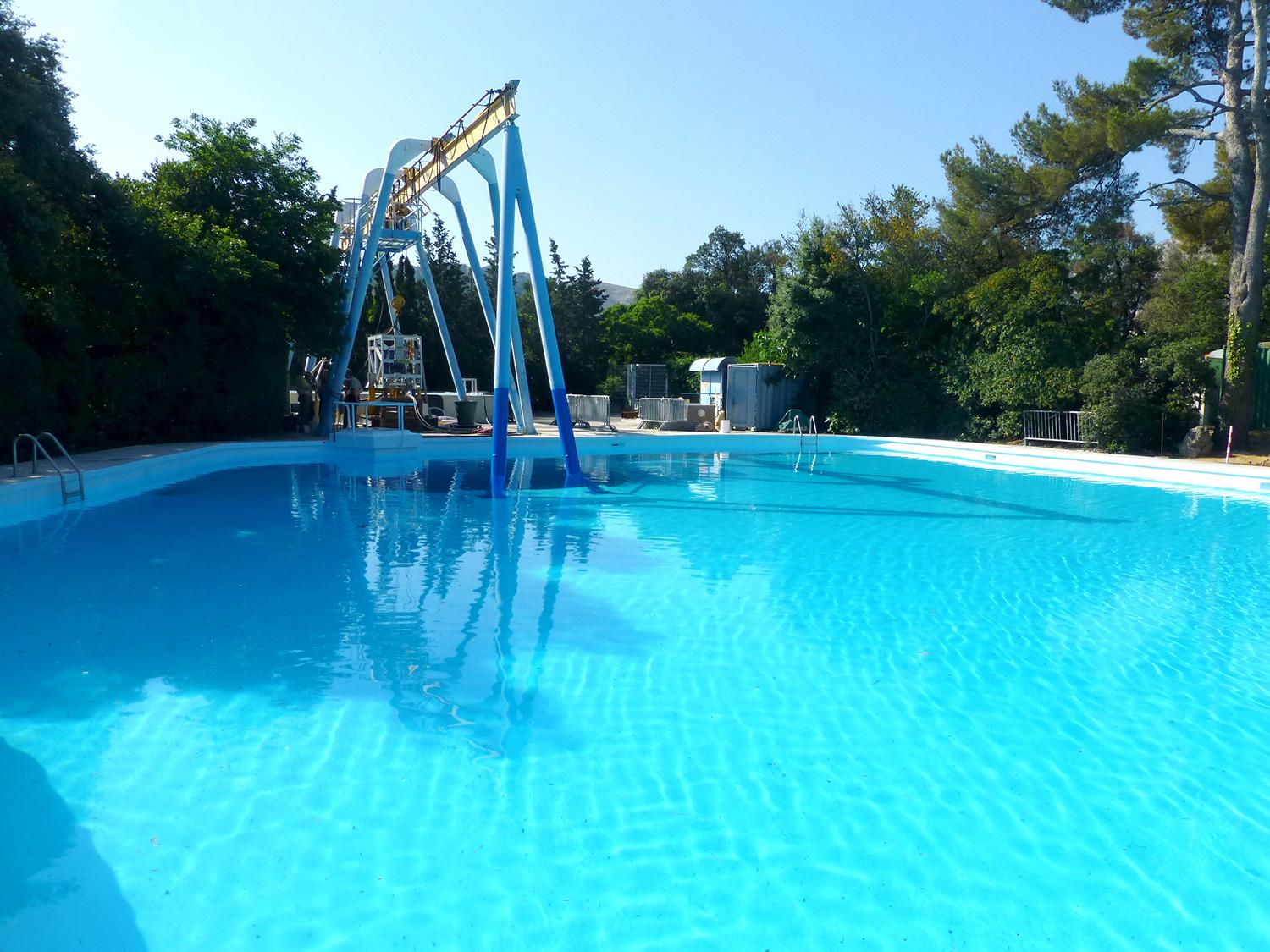
The biomedical research center accreditation covers several COMEX facilities, including the Hyperbaric Test Center, Hypobaric Test Center and testing bassin, specifically designed to support aerospace R&D programs:


  • Altitude (hypobaric) simulator,
  • Dive (hyperbaric) simulator,
  • Dedicated medical consultation room,
  • Real-time audio and video monitoring systems,
  • Immediate access to medical oxygen therapy,
  • Automated external defibrillator (AED) and emergency cart,
  • Resuscitation equipment in close proximity,
  • Continuous physiological monitoring of volunteers.

These facilities enable the reproduction of realistic operational scenarios in fully controlled and instrumented environments.

From ARS accreditation to international aerospace partnerships (2018–2025)

Since obtaining ARS accreditation in 2018, COMEX’s biomedical research center has progressively expanded its scientific and industrial collaborations.

By 2025, this framework supported research partnerships with major aerospace stakeholders, including NASA, focusing on human physiology in hypobaric environments, decompression exposure, and hypoxia risk management.

These collaborations are grounded in:


  • Validated research protocols involving healthy subjects,
  • Advanced control of pressure and decompression environments,
  • Integrated expertise in engineering, medicine, and human factors.

Physiological research supporting hypoxia risk training in aeronautics

Building on its biomedical research activities, COMEX has also developed specialized training programs addressing hypoxia risk, dedicated to civil aviation, business aviation, and private aviation operators.

These programs rely on:

  • Physiological data generated through biomedical research,
  • Hypobaric simulation replicating realistic altitude scenarios,
  • A human factors–oriented approach focused on flight safety.

They were notably developed following collaborations with EPNER (French Test Pilot School – École du Personnel Navigant d’Essais et de Réception), a national reference in flight testing and advanced aeronautical training.

A strategic R&D partner for the aerospace industry

Through its biomedical research center, COMEX positions itself as a trusted R&D partner for aerospace stakeholders seeking to:

These programs rely on:

  • Conduct human physiological research under controlled pressure and decompression conditions,
  • Assess systems, procedures, or equipment related to altitude and hypoxia,
  • Integrate human factors early in system design and qualification phases,on flight safety.
  • Rely on a robust, recognized regulatory and medical framework.

“We are pleased with this authorization, which is rarely granted to private companies – usually reserved for hospitals – as it further strengthens the legitimacy of our biomedical research center. However, this is not new for us: back in the 1990s, during our experimental hydrogen dives, we already held such authorization..

Alexandre Oskian

Head of the Engineering & Services departments, COMEX.SA

Design of a special hyperbaric machine for the SuperGrid Institute

Design of a special hyperbaric machine for the SuperGrid Institute

Special machine for hyperbaric tests up to 40 bar internal pressure to validate the submarine connection concepts for offshore high voltage electrical cable networks. In addition to its imposing size, this hyperbaric chamber has the distinctive ability to perform combined tests on submarine systems of high-voltage cables, including water pressure, dielectric stresses, and temperature cycles. The hyperbaric chamber will allow the integration of one or two input cables and one output cable to allow the creation of an electrical circuit.

In 2017 the SuperGrid Institute entrusted COMEX with the design, realization, and integration of this hyperbaric enclosure.

A few technical features of this special tool :

  •  Combined tests of cables and connectors up to 40 bar pressure and 60°C temperature
  •  Stainless-steel hyperbaric chamber equipped with a porthole and two lights
  •  Self contained handling system necessary to operate this 5 meter long / 10 tons equipment
  •  Innovative 50 bar pressure and watertight feedthroughs for large dimension cables
  •  Provision for various configurations of input and output cables, different in numbers and diameters

International standards such as IEC61886 are considered as the basis on which these tests will be carried out. However, many of the tests to be carried out by the SuperGrid Institute relate to new technologies. Therefore they will not correspond to any existing test standard. This innovative test chamber ensures that the electrical performance and the mechanical integrity of the design conform to the specifications of the product. Any water leak, any dielectric or mechanical degradation would lead to a non-compliant result.
In December 2017, the innovative concept of the cable-gland was successfully validated in the CE 1000 test chamber, one of COMEX Hyperbaric Test Center tools.

The SuperGrid Institute for Energy Transition (ITE) is a platform for collaborative research in the field of low-carbon energy, bringing together the skills of industry and public research in a public-private co-investment logic and close collaboration between all the players in the sector.

The objective of the Institute is to develop technologies for SuperGrid, namely the future networks transporting electrical energy, using direct and alternating current at high voltages (in the order of a million volts). These networks are designed for the large-scale routing of energy produced from renewable sources remote from the centers of consumption, including a significant part located in the ocean (offshore), and which will allow, together with the means of flexible storage, to manage the intermittent nature of renewable energies and to ensure the stability and security of the network.


Website : http://www.supergrid-institute.com/

Deployable compression chamber: COMEX equips the Algerian State

Deployable compression chamber: COMEX equips the Algerian State

In the framework of an earlier contract with the Algerian General Directorate of Civil Protection, two deployable new-generation compression chambers are now in operation.

In the framework of an earlier contract with the Algerian General Directorate of Civil Protection, two deployable new-generation compression chambers are now in operation.

The contract closed with the training of 10 people from the General Directorate of Civil Protection (DGPC). In November 2017, technical experts of the COMEX Engineering and Services Department trained the user staff for level 1 maintenance (according to the standard NF X 60-010) and in the use of deployable emergency compression chamber CX 1800 320.

The two new-generation two-place re-compression chambers, respectively installed in Algiers and Oran, are ready to deliver hyperbaric oxygen (HBO) therapy treatments for all the Algerian territory. In effect, the model of mobile compression chambers was selected to meet the need of the General Directorate of the Civil Protection to use this decompression system for various operations across the country. The containerized structure offers the advantage of moving the equipment by land (by truck) as well as by sea or air.

Each hyperbaric chamber is composed of a treatment chamber which can accommodate 2 patients sitting and 1 patient lying down, and an equipped airlock with 2 seats. The equipment, in accordance with the European Directive of Pressure Equipment, is equipped with the latest COMEX technologies for control and design: sessions controlled by an automatic system, support with multiple user modes, LED lighting, innovative communication system. On the other hand, the maintenance staff benefits from facilities and coatings that optimize the decontamination.

The end user can also depend on the COMEX Services Department to carry out maintenance on its complex equipment and to provide assistance for its use.
Pioneer since 1961 in hyperbaric systems, COMEX has installed hundreds of installations around the world and reinforces its ties with the Maghreb.

Management team: Alexandra Oppenheim Delauze (CEO) and Alexandre Oskian (Director of Engineering and Services Departments), the various professions involved in the project: Commercial and technical management, mechanical engineers, fluids experts and technical support, design manager, hyperbaric technicians.

COMEX and the Design of Habitats for Space Exploration

COMEX and the Design of Habitats for Space Exploration

COMEX and the Design of Habitats for Space Exploration

gondolfi, combinaison spatial, habitat lunaire

COMEX, renowned for its expertise in extreme environments, has played a key role in the development of habitats designed for space exploration. Following an in-depth study phase, the full-scale (1:1) mock-up of the SHEE (Self-Deployable Habitat for Extreme Environments) module was assembled in COMEX’s workshops, with completion scheduled for the end of summer. Once deployed, this mock-up—covering an area of approximately 50 m² includes: :

An entrance hall A workspace for two people A kitchen A sanitary area Two individual sleeping quarters

Built using high-tech composite materials such as honeycomb structures, thermoplastic foams, fire-retardant gel coat, and fiberglass, the SHEE module benefits from methods inspired by competitive yacht construction. This design ensures simplicity and speed of deployment, enhanced thermal and mechanical resistance, and a highly competitive cost. This achievement illustrates the effectiveness of balanced cooperation between institutions and specialized companies within the European Union.

COMEX and the lunar space station Gateway

As part of the Artemis program, which aims to establish a sustainable human presence on the Moon, COMEX is collaborating with Airbus on the development of modules for the Gateway space station. In November 2018, COMEX and Airbus signed a cooperation agreement for the development of ESPRIT (European System Providing Refueling, Infrastructure and Telecommunications), one of Gateway’s European modules. This module is essential for future lunar missions, serving as a relay between Earth and the lunar surface.

COMEX’s expertise in pressure management for space exploration

COMEX has unparalleled expertise in pressure management, a critical aspect of the design of space habitats. This capability is fundamental to ensuring the safety and well-being of astronauts during long-duration missions. COMEX’s experience in creating pressurized environments and its ability to simulate extreme conditions make the company a key partner in the development of habitats for space exploration.

Conclusion

Thanks to its technical expertise and strategic collaborations, COMEX is well positioned to play a major role in the design of space habitats for lunar exploration and beyond. The full-scale mock-up of the SHEE (Self-Deployable Habitat for Extreme Environments) module and its involvement in the development of the Gateway station illustrate COMEX’s commitment to pushing the boundaries of space habitat design, thereby contributing to the advancement of human space exploration.